PPC vs SEO: which is right for your business, and when to use both
PPC vs SEO compared: speed, cost, control and how long results last, with a simple way to decide which to start with and how the two work together.
By Daniel Stoychev, Webso Digital · 3 October 2026 · 5 min read
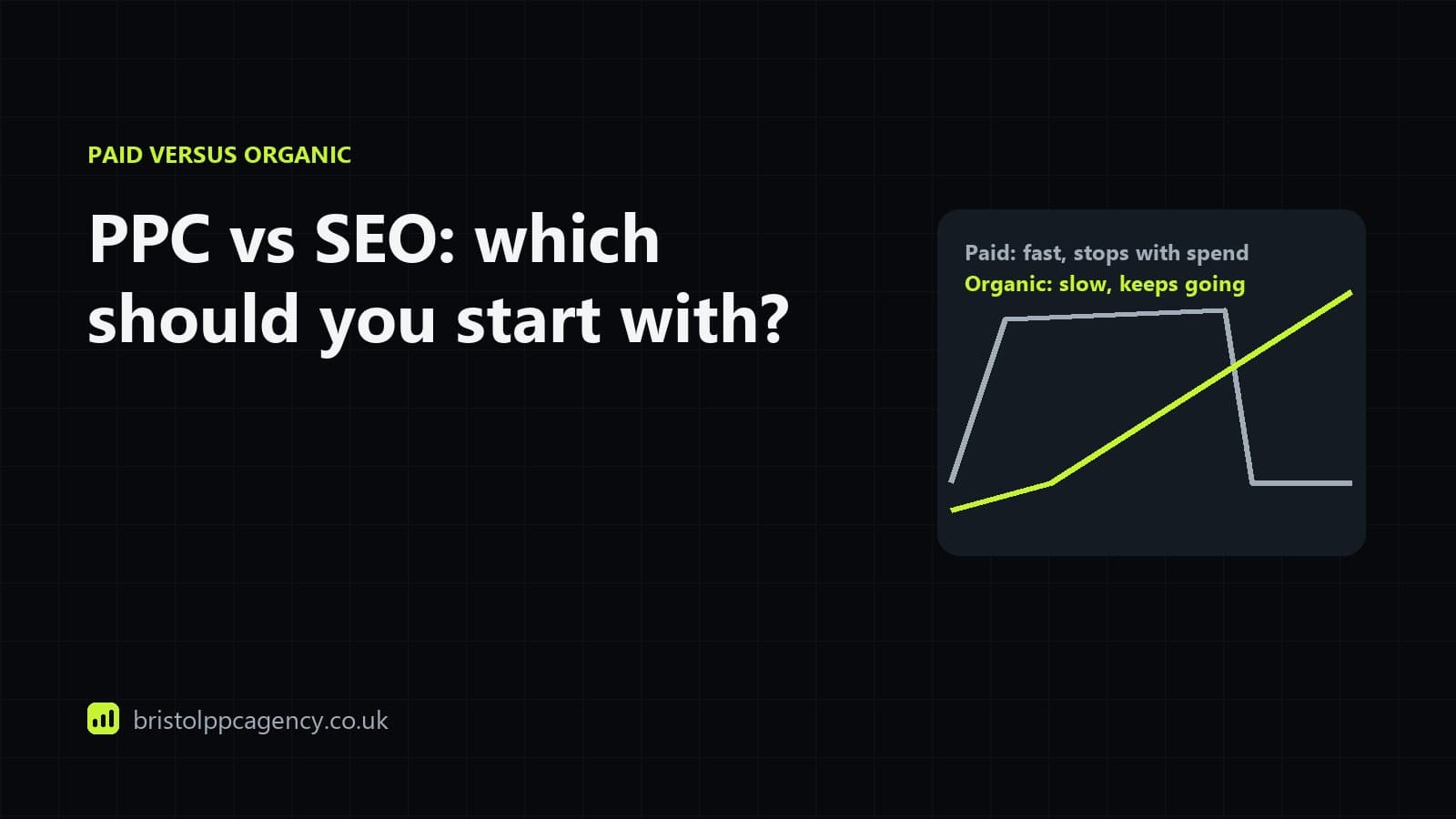
PPC buys a place at the top of the search results for as long as you keep paying; SEO earns an unpaid place by making your website the most useful answer, which takes longer but keeps working after the effort stops. PPC is the faster and more controllable of the two, SEO the more durable. Most businesses that rely on search end up using both, with PPC covering the gap while SEO builds.
The differences side by side
| PPC | SEO | |
|---|---|---|
| Speed | Ads can show the day you launch | Usually months to rank for competitive searches |
| Cost model | Pay for each click | Pay for the work; clicks are free |
| When you stop | Traffic stops | Rankings fade slowly, if at all |
| Control | Choose searches, areas, times and budget | Google decides what ranks |
| Testing | Quick to test offers and messages | Slow to test |
| Trust | Some people skip ads | Organic results often earn more trust |
When to start with PPC
- You need enquiries this month, not next year.
- Your site is new and has no search history yet.
- You want to test whether there is demand for a new service, product or area before investing in content.
- The searches you want are dominated by large, established sites that will take years to outrank.
When to start with SEO
- Clicks on your searches are very expensive and customers are not worth enough to pay for them.
- You can wait several months for results.
- Your customers research for a long time before buying, reading guides and comparisons.
- You have the knowledge and time to produce genuinely useful pages.
How they help each other
Paid search data shows which searches turn into customers within weeks, which tells you which pages to build for SEO. Good landing pages lower PPC costs and also rank organically. Appearing in both the ads and the organic results for the same search tends to win more of the clicks than either alone. And when organic rankings are strong for a search, you can reduce paid spend there and move it to searches where you do not rank yet.
What about AI answers?
More searches now show an AI summary above the results. Ads still appear around it, and well-structured pages with direct answers are what those summaries quote. Neither PPC nor SEO has been replaced; both are being shown alongside a new kind of result.
A simple way to decide
Start with PPC if you need results soon and your numbers work, using the PPC calculator to check. Start SEO alongside if you plan to rely on search for years. The team behind this site does both, so the audit can tell you which your situation needs first.
How the costs compare over time
PPC costs are visible and immediate: you pay for each click, every month, for as long as you want the traffic. SEO costs are mostly upfront and harder to see: the time to build pages, earn links and fix technical problems, with traffic arriving months later and continuing for some time after the work slows.
| Timescale | PPC | SEO |
|---|---|---|
| First month | Traffic and enquiries from the first week | Usually little or no new traffic |
| Three to six months | Steady cost per lead once optimised | Rankings begin for less competitive searches |
| A year or more | Still paying for every click | Traffic can grow without paying per click |
Which way different businesses lean
- Emergency and urgent services lean on PPC, because they need calls today and the map and ads sit above organic results.
- Shops with many products often use both: Shopping ads for products, SEO for category pages and guides.
- B2B and professional services with expensive clicks often lean on SEO and content, using PPC for their highest-value searches.
- New businesses usually start with PPC, because a new website has no organic history yet.
Measuring both fairly
Use the same measure for both: enquiries or sales recorded in GA4 or your own system, not each channel's own report. Search Console shows organic searches and positions; Google Ads shows paid. Comparing cost per lead across both tells you where the next pound of budget or hour of work is best spent. Review it quarterly, because the answer changes as organic rankings grow and click prices move.
Written by
Web developer and paid search specialist at Webso Digital, which runs Bristol PPC Agency. Builds the campaigns, the landing pages and the tracking, and writes these guides from that work.
Questions on this topic
Is PPC or SEO cheaper?
Over a short period, SEO usually costs more for less, because it takes time to work. Over years, a strong organic presence can deliver clicks more cheaply than paying for every one. The answer depends on your timescale and how expensive your clicks are.
Does running Google Ads help my SEO?
Not directly; paying for ads does not change organic rankings. It helps indirectly by showing which searches convert, which guides what to build for SEO.
Can I do PPC and SEO at the same time?
Yes, and many businesses do. Ads cover the searches you do not rank for yet, and spend can be reduced where organic rankings become strong.
Which gives better quality leads?
It varies by business. Paid leads can be targeted more precisely; organic leads often arrive having read more about you. Track both to compare.
Which should a new business start with?
Usually PPC, because a new website has no organic history and needs enquiries now. Start the SEO work at the same time, so that by the time organic rankings arrive the paid budget can be moved to the searches you still do not rank for.