How to choose a PPC agency: the questions that separate good from bad
How to choose a PPC agency: the questions to ask before you sign, what good answers sound like, the warning signs, and when in-house makes more sense.
By Daniel Stoychev, Webso Digital · 3 October 2026 · 5 min read
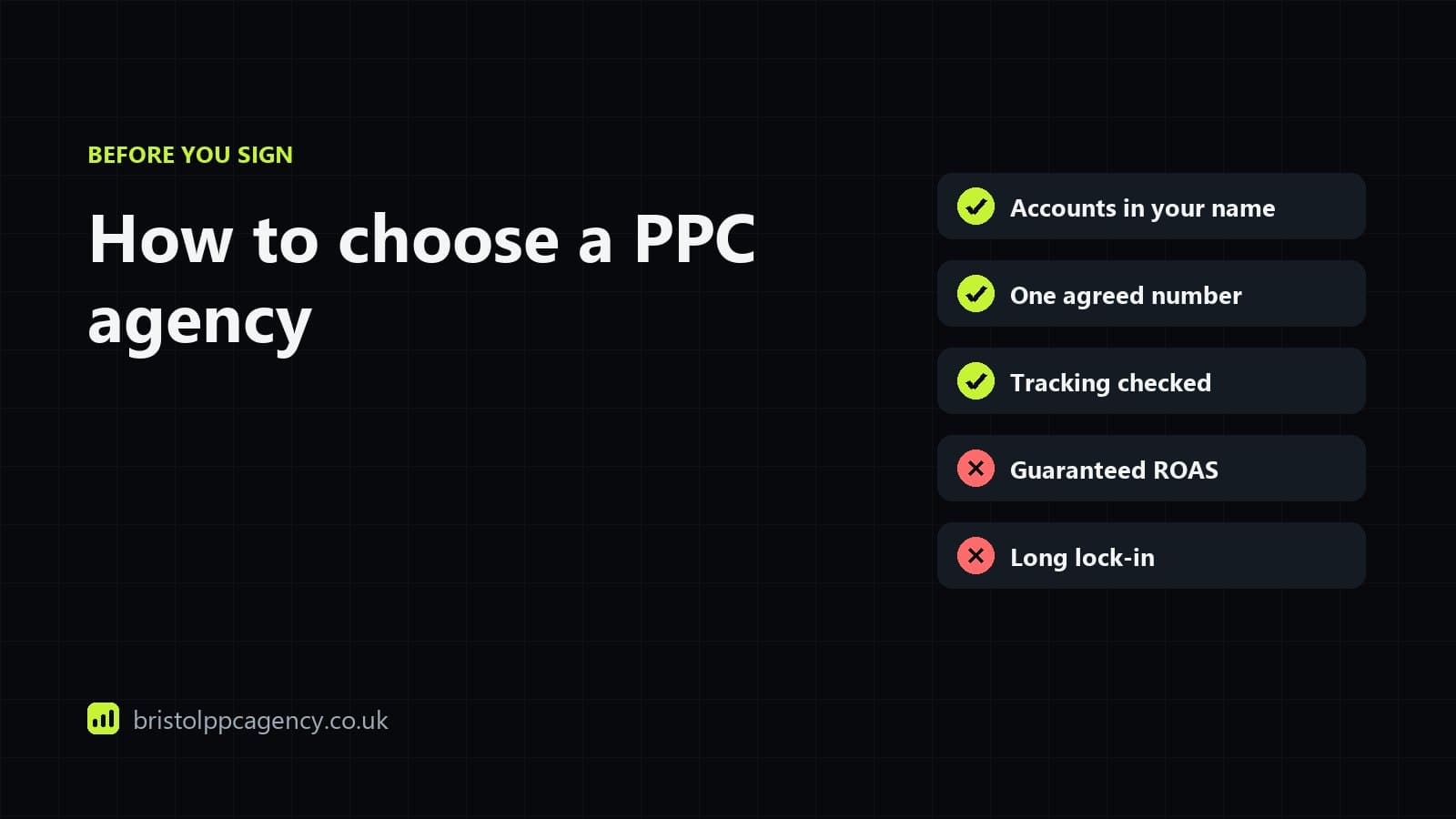
The best way to choose a PPC agency is to judge what they will show you before you pay, not what they promise. A good agency will tell you which searches they would target and why, how they will track results against your own records, what you will see in a report, and that the ad accounts stay in your name. If they cannot answer those clearly in a first conversation, keep looking.
Questions to ask before you sign
- Whose name are the ad accounts in? The answer should be yours. If they create accounts in their own name, you lose the history when you leave.
- What would you change first in my account, and why? After an audit, a good agency names specific problems, not general improvements.
- How will you measure success? Listen for your business number, such as cost per lead or return on ad spend against margin, not clicks or impressions.
- How do you check that conversions are real? They should compare platform figures with your own records.
- Who actually works on my account, and how often? Ask whether it is the person you are talking to or someone more junior.
- What does a monthly report look like? Ask to see one with the client's name removed.
- How are you paid? A fixed fee, a percentage of spend or a mix; understand what each means for their incentives.
- What is the notice period, and what do I keep if I leave? Accounts, tracking, landing pages and reports should all stay with you.
What a good answer sounds like
| Topic | Weak answer | Strong answer |
|---|---|---|
| Results | "We will double your ROAS" | "Here is what your margin means for break-even, and here is what we would test first" |
| Reporting | "You get a dashboard" | "You get a written report of what changed, why, and what we will do next month" |
| Tracking | "Google tracks it" | "We will check Google's numbers against your sales or CRM" |
| Ownership | "We manage everything for you" | "The accounts are yours; we are added as managers" |
Warning signs
- Guaranteed rankings, positions or a specific ROAS before they have seen your data.
- Reports full of impressions and clicks with nothing about leads, sales or cost per result.
- Long minimum contracts with no clear reason.
- Reluctance to give you access to your own accounts.
- Every account set up the same way regardless of the business.
Fee models compared
A percentage of ad spend scales the fee with the budget, which can reward spending more rather than spending better. A fixed monthly fee separates the agency's income from your spend, so their advice on budget is less conflicted. Performance fees tie payment to results but depend entirely on tracking that both sides trust. There is no single right model; understand the incentive in the one you choose. Our own approach is explained on the pricing page.
Agency or in house?
Running PPC in house makes sense when you have enough spend to justify a skilled person's time and someone available to keep learning a platform that changes constantly. An agency makes more sense when the budget does not justify a full-time hire, or when you want experience across many accounts. Some businesses do both: an in-house marketer with an agency for setup, audits or specialist channels.
What a good audit contains
Many agencies offer a free audit. A useful one is specific to your account and tells you something you did not know. Expect to see:
- The share of spend going to irrelevant searches, with examples from your search terms report.
- Whether your conversion tracking counts the right actions, checked against your own records.
- Settings that are costing money, such as location options, network settings or auto-applied recommendations.
- Landing page problems: speed on mobile, message match with the ads, form friction.
- A short list of changes in order of impact, with the reasoning.
An audit that is mostly generic best practice, or that recommends a full rebuild without explaining what is wrong with the current account, tells you more about the agency's sales process than your account.
Red flags in a monthly report
- Impressions and clicks at the top, with leads or sales buried or missing.
- Results always described as up, with no explanation when something falls.
- No mention of what was changed, so you cannot tell whether anyone worked on the account.
- Figures that never match your own sales or enquiry records.
Written by
Web developer and paid search specialist at Webso Digital, which runs Bristol PPC Agency. Builds the campaigns, the landing pages and the tracking, and writes these guides from that work.
Questions on this topic
How much does a PPC agency cost?
Fees vary by agency, model and scope: fixed monthly fees, a percentage of spend, or a mix. Ask for the fee in writing, what it includes, and how it changes as your budget grows.
Should I sign a long contract with a PPC agency?
Be wary of long minimum terms without a clear reason. A short initial period while the account settles is reasonable; after that, monthly or quarterly notice keeps the agency accountable.
Can I get a free PPC audit?
Many agencies offer one, including us. A useful audit names specific problems in your account and estimates their cost, rather than listing generic best practices.
What should a PPC report include?
Your main business measure against target, what changed and why, spend and results by campaign, and what will be tested next month, in plain language.
Should I choose a local PPC agency?
Being local matters less than knowing your market and answering the phone. Paid search is managed online, so judge an agency on its answers, its reporting and whether you would own the accounts, rather than on how close its office is.